

Pirating failed resolutions: ala Mediterranean pirates
These Cilician pirates decided to do something with failed resolutions

On when Julius Caesar got captured by pirates who were tired of governmental resolutions
Hi everyone-
What IS it with failed resolutions?
Every year we try. Every year we fail. And this is true for everyone. A nation’s people and governmental bodies.
How come?
Resolutions are not something I grew up with. My family in Sumatra don’t know what resolutions meant. My uncle chain smoked until he died at age fifty. Not once did he bother trying to quit. My still living 97-year old grandmother made zero resolutions in her lifetime. Yet here she is, still outliving all. And the rest of my extended village family just goes on with their life. So standing between that world (where resolution just ain’t it) and this world (where my friends make resolutions each year), I can’t help but wonder:
Is there a way to intercept—to pirate, almost—failed resolutions?
And can they be course-corrected?
Let’s dive in.
-Thalia
Imagine if you’re the most powerful person in the world.
And you’ve just resolved to dominate new lands. With forces at your command. Men ready to bleed in the name of a superpower. And you’re leading that movement.
One leader, who happened to be some dude named Julius, was as aristocratic as it gets. Robed in draperies that put grandmother’s best linens to shame. Golden everything adorning every anatomical extremity. And around him: parchments unrolled all over marble tables. These weren’t school essays for a teacher to grade. These were maps and texts of battle plans. For military campaigns, as they called it. They were playbooks on how to penetrate. Break into. And win lands that were not yet rightfully theirs.
“Rightfully theirs …”
What a strange set of words. The meaning is so obvious to both sides of any fight. Except what precisely is rightfully anyone’s—is always in contention.
For years the Roman empire had been focusing on conquering lands. In the process, they sort of slacked off on the seas. And on actually caring for ancillary towns. So around 2nd century BC, desperadoes in the Mediterranean Sea has had enough. A group of people later known as the Cilician pirates (from a region that is today Turkey) … rose in rebellion.
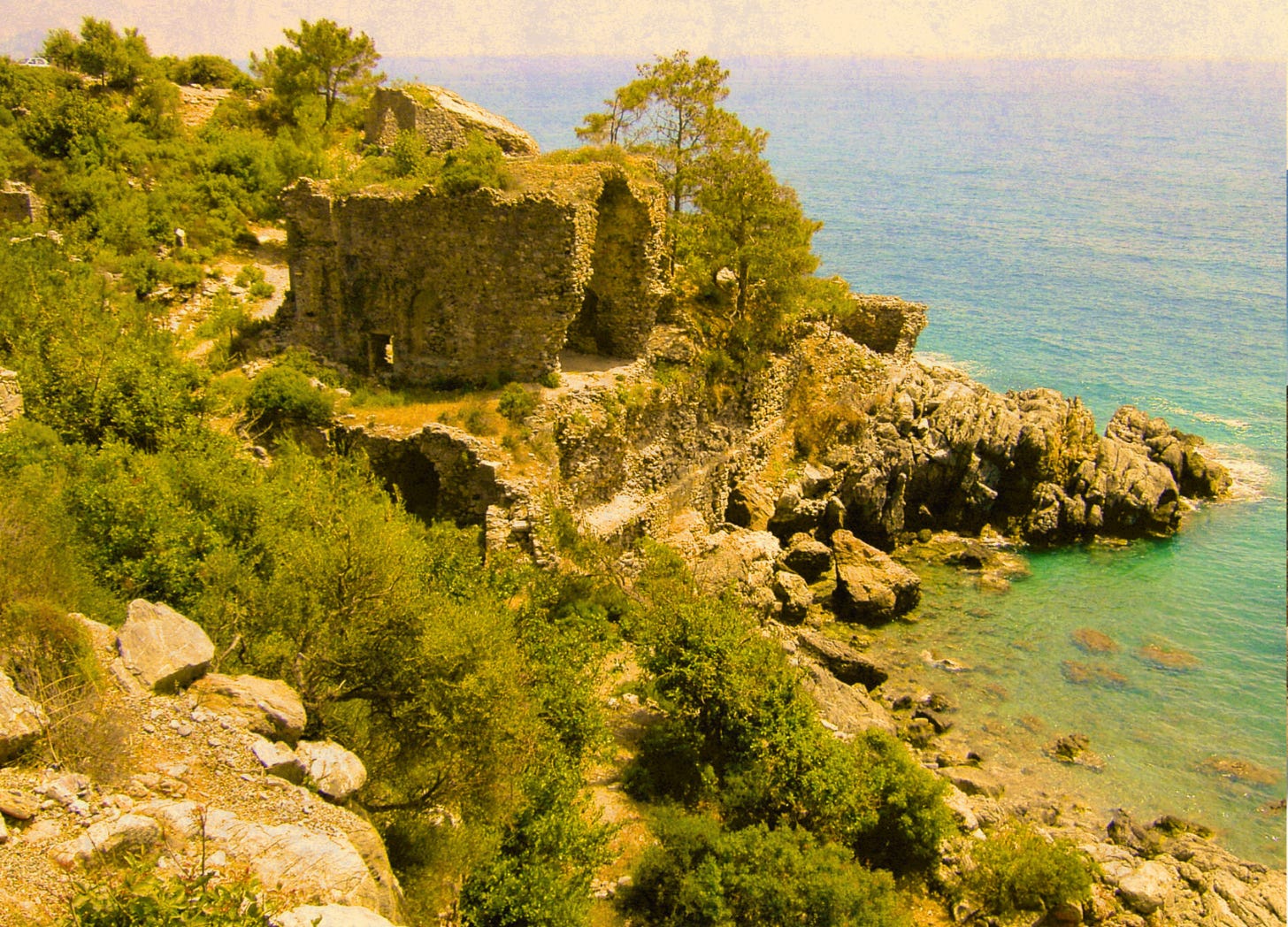
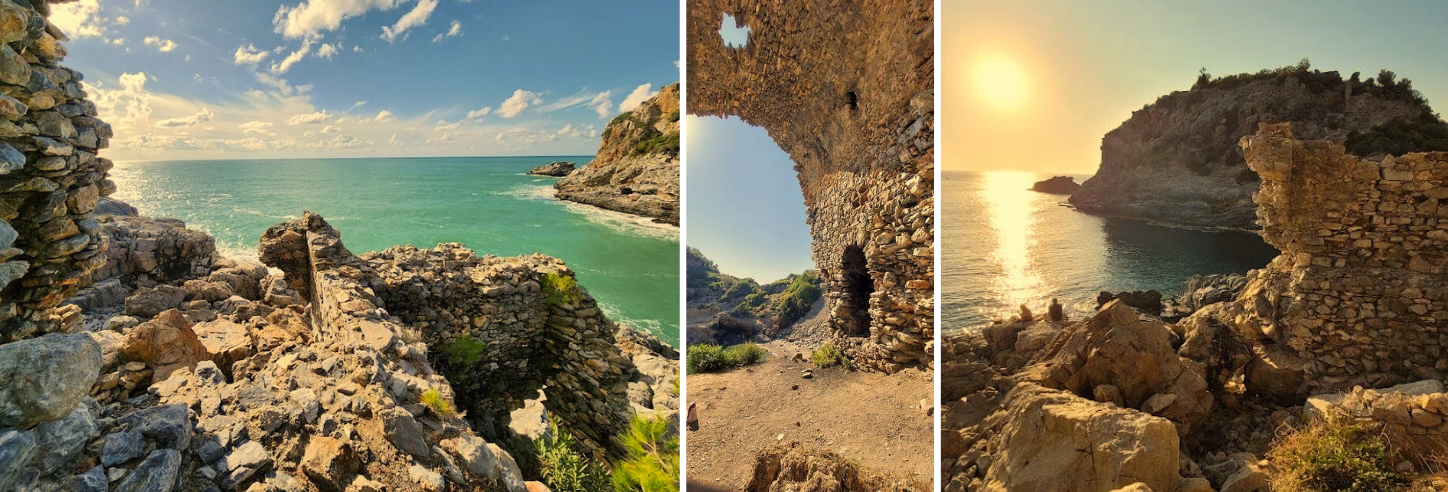
The Cilician pirates’ thinking was something along the lines of:
“Why should the Roman government benefit from everything? Just because they have the biggest ship. The most money. And the greatest military army. The Romans became a superpower from winning battles, taking over lands, and looting treasures of conquered lands. So we’ll do the same. Just at sea. And we’ll do it TO the Romans’ own war looting (fine, ‘winnings’).”
Of course, by the time these Cilician pirates came about, the goods they pirated weren’t really war winnings anymore. They were grains, natural resources, and trade items brought by the Romans from Egypt. In big ships. And because they were big, they were slow-moving. Of course, there was no engine. No horsepower. Just man-power. An easy target.
But lets return to the man at hand for one moment: Julius Caesar. He was on his emperor ship. The equivalent of Air Force one back then. No doubt, he also had guards on watch. Except, this one fine day, near the island of Pharmacusa, the Cilician pirates had him. The location was perfect. Pharmacusa was far enough away from all the surrounding islands. It would be hard for Julius’s crew to get immediate help.
There were little surviving texts on how the intercept came about. Or how the Cilician pirates even heard of when and where Julius had set sail. But it’s not too hard to imagine that some mole got paid handsomely enough to betray his emperor. Or some employee got tired enough with his boss. Or his boss’s boss. Doesn’t matter. Basically, this is what happens when a system revolves only around power and money. People get unhappy. And they start treating others, including their leader, like trade goods.
Pirates now had become synonymous with the image of a downgraded British upper class who just didn’t wash their clothes. We can thank popularized stories of Captain Hook, Captain Kidd, and Captain Jack Sparrow for this. And in that time and geography, that might’ve been true.
But in 75 BC, the Cilician pirates would’ve been dressed much like any Greco-Roman merchant. In simple clothing wraps around their shoulders and hips. Definitely not a colonial garb.
Pirates had also become synonymous to the image of people tarzan-swinging into ships. On ropes. With swords at-the-ready. And maybe the Cilician pirates did this. But more likely: once they’re close enough to Julius’ ship, smaller boats were deployed and lowered. In these boats: are the best front line guys who know close-range hand-to-hand combat. At this point, Julius would’ve long known about the pirate ship. And his men (well, the loyal ones, anyway) would’ve more than geared up for the incoming attack. Cannons weren’t invented for another 1,000 years. So it’s arrows and spears, guys. The swords (or gladius as they called it, thus “gladiators”) also played a part.

Now, let’s go back to Julius Caesar, a seasoned man in warfare. That’s the thing about wars and battles, though. Strategies are great only up to a certain point. Once they’re in close range, it’s usually every man for themselves. I want to know who precisely dropped the ball on guarding Julius. Or maybe it wasn’t a matter of negligence. Maybe it’s a matter of the pirates out-foxing Julius’ men. Maybe it’s even Julius himself who was just rusty and needed a training refresher. In the end, there’s really only so much one man can do with their gladius. Especially when the mission of this particular trip, was … um, professional development.
Julius was heading south to Rhodes to study oratory. I bet he was already a decent orator. But when you’re trying to rule the world, well, being a killer orator was a must. Since the mission of this trip was to shuttle him to a work retreat, it is possible that he didn’t have quite his best men in the fleet. They would’ve been on that all-important, land-focused military campaign.
He must’ve regretted it slightly, when he realized now that he was a captive. Held hostage for a total of, well: 25 talents. Scholars estimate that 25 talents would’ve even been enough to construct an entire tabernacle. And based on today’s construction prices and historic inflation rates, 25-talents is easily in the multi-million dollar range.
But Julius was a 25-year old guy who had it all. When he heard them demand this amount of ransom money, he laughed. The mocking-est laugh if ever there was one. He thought it was a joke. Hostages were known to try to haggle down the demand money. This guy wanted to up it.
He said: Make it 50.
Stakes were now doubled.
The Cilician pirates now had even more reason to say: That 50 talents are now …
“Rightfully theirs.”
To them, the logic was: in a physical fight, the winner takes all. Prisoners, captives, hostages, and ransom money. Especially at a price valued by the hostage himself. Philosophically, socioeconomically, and historically, this is very complex.
We can say that Julius was insulted at being priced the sheer amount of just one of his meager construction projects. We can say that this was an alpha flex move on Julius’ part. We can also say that this was a way for Julius to lull them into a false sense security. On the pirates-side, we can also say that, if the Roman empire gets to ‘rightfully own’ slaves, treasures, and goods won in a battle: How are their demands any different?
At this point, it’s hard to tell who really had the upper hand:
The ones pointing their gladius at the prisoner, holding their breath for payday?
Or the one who can command an army of gladiators and everyone’s payday?
To be clear for those who are new to my writing: I’m neither endorsing the pirates’ choice to short-circuit their success nor am I approving the Roman empire’s lust for colonization. But we don’t have time here to discuss this in depth. Especially if Julius is still left hanging.
Considering that he was the most powerful man in the world at the time, it truly is interesting what he did afterwards. The young emperor was held captive for over a month. During that time, if he was afraid, he definitely didn’t show it. He bossed everyone around. He made everyone listen to him reciting poetry. And he did what anyone of his stature would do to save face: he threatened to execute all of them.
It was said that the guards went: Yeah, right! They jeered. And while they can: they threw insults at him. They might’ve even tossed a coin and wage bets on the chances of Julius getting out of there, alive. I guess that oratorial retreat ended up becoming a live-practice session on oratorial persuasion.
Still, Julius didn’t persuade anyone. Back then, most hostages couldn’t. They knew that if their friends didn’t send the money, the alternative is: sold for slavery. Oddly, though the idea of kidnapping, ransoming, and selling slaves sounds cruel (and it is), the more disturbing reality is that, well, the Roman aristocrats benefited from slave trade themselves. It’s hard to explain. But cheap labor came to mind.
Cheap labor for the Roman aristocrats was supposedly legit. As long as they’re ‘paid for’, it was technically:
“Rightfully theirs.”
So Cilician piracy was a ‘necessary evil.’
Or is it?
I guess the better question might be: Would slavery driven by Cilician piracy even existed IF there were no buyers to begin with?
If you think about how societal systems were—no, are—structured, there are always those who got the least. Perhaps the Cilicians’ long-held reputation as pirates was their revolt. Their mode of communicating, that: We are tired of the status quo, where the Roman rich just keeps getting richer. Where the Roman powerful just gets more untouchable. And where the lowly bottom can’t ever have the same.
So when they outsmarted the world’s most powerful man, feasts it shall be …
—on the day the Cilician pirates got their multi-million. Can you imagine what millions must’ve been like then? Come to think of it: what it must’ve been like … now. They must’ve thought that they were set for life. That their families would never go hungry again. That their village would welcome them home as heroes.
Like all parties, though, they eventually die down, don’t they? The line between massive fun and self-loathing is very thin. In the Cilicians’ case, the cause for celebration wasn’t stopped by some drunk who ruined the party. It is by a revenge search unleashed by Julius Caesar himself.
When the Roman soldiers and their thunderous horses come for you, it’s a wow-factor like no other: part-awe and part-fear, both mixed into a confused state of chaos. If the foot soldiers wore shiny things for a non-shiny criminal hunt, it tells us: that they, or at least their boss, have money … to burn.

This time, the philosophical question of what exactly is:
“Rightfully anyone’s …”
—gets tested some more.
The Cilician pirates stole what was the Roman empire’s rightful $10 million. By force. And now they will make them regret it. The pirates, of course, didn’t have as much as Julius. So he didn’t hunt them down for the money. Besides, once they’ve made it personal, well, a wrathful emperor … just did not hold back.
Julius let. It. RIP.
He sent a search to exterminate those guys who laughed. Those who mocked him. And those who didn’t believe his word. Clearly, he had something to prove. The pirates were crucified immediately. Crucifixion, of course, was the ultimate shaming. We’ve heard about Jesus who, less than a century later, got the same treatment. Pre-Jesus, it was meant to be just as embarrassing. Just as barbaric. And just as punitive. The Cilician pirates who wronged Julius here crucified, starved, tortured, and left to rot.
It didn’t end there, though. Julius’ wrath mutated. When Julius was held captive by the pirates, he learned some things. He learned who’s who. He found out how they operated. Where they operated. And ways to infiltrate their vast, secret network. It was enough for him to send men to find out more details. And whisper back: a plan of attack. This time: to end them for good.
So in 67 BC, Julius charged his general, Pompey, to hunt down 800 pirate ships. It took Pompey 40 days to capture them all and take back what was ‘rightfully theirs’. The Cilician pirates were no more. And the Cilician people went to farming, agrarian trade, and fishing. Until all that’s left of their piracy legacy … is nothing more than bed time tales. Tales about that time, when they got the most powerful man in the world. In the middle of the turquoise Mediterranean sea.
In the end, the question of what is ‘rightfully ours’ remains an object of contention. Seemingly: anyone who takes, will be taken from. Anyone who gives, will be given to. The law of reciprocity predates that of property and piracy. It only becomes ‘piracy’ and ‘property,’ when a resolution gets quantified, moneyed, and consequently: indebted.
Still, we believe some basic facts:
The right to live and to do so freely.
Everything else, well—is a Cilician-Roman coin toss.
-Thalia
Thanks for such excellent storytelling. It reminds of the quote attributed to Bill Clinton that there are no permanent victories of defeats in politics. While your story was about real warfare, it seems that Clinton's observation holds - mostly - true.
"But we don’t have time here to discuss this in depth. Especially if Julius is still left hanging."
This had me chuckling ...
Thanks for an enjoyable read Thalia!